














superx
All-in-one growth OS for serious 𝕏 creators
837 Votes and a Chrome Extension: SuperX Is Betting X Creators Will Pay for Better Data
The Macro: Everyone Wants to Be the Dashboard for X
The social media management market is projected to hit $39 billion by 2026 and $164 billion by 2034, per Fortune Business Insights. That’s a CAGR of nearly 20%, which means either the analysts are very optimistic or the demand for software that tells you why your posts flopped is genuinely enormous. Probably both.
The creator economy layer is where things get crowded. Buffer, Hootsuite, and Later have held the generalist scheduling space for years. Iconosquare competes directly on analytics. For X specifically, tools like Typefully and Hypefury have built loyal followings among the newsletter-and-personal-brand crowd. And then there’s Foller.me, which has been doing basic X profile analytics for longer than most current X users have had accounts.
Two things collided recently, and that collision is the actual “why now.”
Elon Musk’s ownership of X has pushed the platform into a strange position where it’s simultaneously losing major advertisers and gaining a more intentional creator base that actually wants to monetize. Subscriptions, long-form posts, creator revenue sharing. The platform is trying to be something, even if it’s not entirely sure what. That ambiguity creates a wedge for tools that help individual creators extract value from the mess.
The second thing is AI getting cheap enough to live inside a SaaS product without destroying margins. Content rewriting, trend detection, voice matching. None of this was practical at a $29/month price point two years ago. Now it’s table stakes, which means every new entrant is promising AI-assisted everything, and the real differentiator has to be something else: UX, data quality, or how well the thing actually learns your specific voice.
The Micro: What SuperX Actually Does Under the Hood
SuperX is positioned as an all-in-one growth toolkit for X. Scheduling, analytics, AI-assisted content, and engagement targeting, bundled together. It runs as both a web app and a Chrome extension, and the Chrome Web Store placement suggests some real distribution momentum.
The product breaks into a few distinct functions. The analytics layer tracks post performance and audience behavior. Standard in concept, but the interface appears designed to surface actionable signals rather than just dump raw numbers on you. The content side is where the AI enters: SuperX reportedly generates daily post ideas based on viral content in a user’s niche, rewrites drafts in the user’s voice, and flags trending topics worth jumping on. The scheduling component picks optimal posting times.
The engagement piece is the most interesting feature here, and the least common in this category. It identifies which accounts to interact with to improve discoverability, which is a different kind of value than anything scheduling or analytics alone can offer.
The Chrome extension angle matters more than it might seem. It sits inside the browser where users are already on X, which lowers the friction of actually using the tool. That’s a different adoption motion than asking someone to log into a separate dashboard every time they want to post.
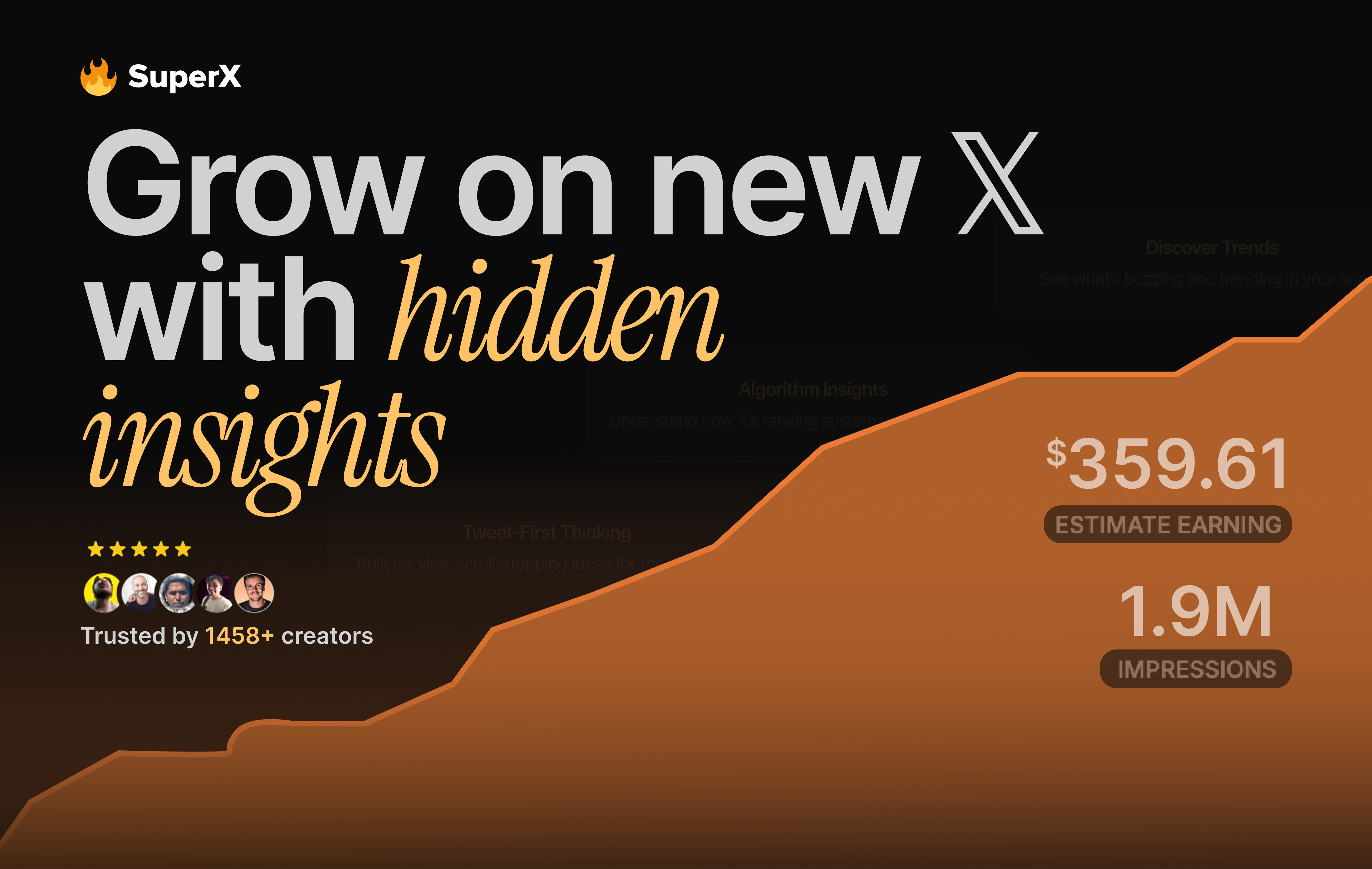
It got solid traction on launch day. The website claims 1,458+ creators are currently using it, which is a specific enough number to feel real rather than rounded-up marketing copy. According to LinkedIn and Crunchbase, the company was founded by Austin Gayne, who reportedly started it at 23 while sleeping on his mom’s couch. The CTO is Adrian Kozhevnikov. Small team, which matters for how fast they can actually iterate on feedback.
User testimonials on the site skew toward the content inspiration feature. Specifically, that it captures voice without plagiarizing other posts. One creator mentions using it for 3D printing content ideas, which is either a very niche endorsement or a sign the niche targeting actually works. I’d want to know which.
The Verdict
SuperX has a credible product, a legitimate launch, and a real market. The comment volume on launch suggests actual conversation happening, not just a coordinated upvote campaign.
The 30-day question is retention. Content tools live and die on whether they become habit. If the AI-generated inspiration feature genuinely saves a creator 20 minutes a day, they stay. If it starts repeating itself or producing ideas that feel generic, they churn and go back to staring at a blank composer. The voice-matching claim is particularly load-bearing here. It’s either the best thing about the product or the first thing that disappoints people.
At 60 to 90 days, the real test is data quality. The engagement-targeting feature, surfacing which accounts to interact with, is the piece none of the direct competitors are emphasizing. If that actually drives measurable follower growth, it’s a genuine hook. If it produces a list of accounts that could’ve come from a Google search, it’s a feature that gets quietly ignored.
I think this works well for solo creators who are already posting consistently on X and want sharper feedback loops without hiring a strategist. It’s less clearly the right fit for brand accounts or anyone managing multiple clients, where the workflow complexity tends to outpace what a lean tool like this is built for. What I’d want to know before fully endorsing it: retention curves, and whether those 1,458 users are on free or paid tiers. A strong launch and a strong product are two different things, and right now SuperX has clearly demonstrated one of them.
Also featured on HUGE: Helply Bets Its Business Model on a Number: 65% · The Contract Amendment Problem Nobody Talks About Because Everyone Just Rereads the Whole Thing · Gojiberry Thinks the Cold Email Is Dead. It Built an AI Agent for What Comes Next.