























supa-social
Self-host your community platform
Supa Social Wants You to Own Your Own Town Square
The Macro: Everyone’s Building Platforms, Nobody Owns Their Data
Here’s the uncomfortable thing about running a community on Discord or Circle.so. You don’t own any of it. The users, the posts, the moderation history, the engagement graph — all of it lives on someone else’s infrastructure, subject to someone else’s pricing decisions and someone else’s API deprecations. You’re a tenant. A well-treated one, maybe, but still.
The numbers around community platforms are genuinely absurd. Global social networking revenues are somewhere north of $238 billion in 2024, according to Grand View Research, and Mordor Intelligence puts the social networking market at around $180 billion in 2025, expected to nearly double by 2030. That money is not going to community builders. It’s going to the platforms they’re locked into.
A lot of people have noticed this. The self-hosted, federated, and open-source social space has been buzzing for a few years now. Mastodon picked up steam after the Twitter chaos. Discourse is still the go-to for serious forum operators. Ghost added membership features. Forem (the thing that powers dev.to) exists. There’s no shortage of options if you’re willing to manage a server.
But most of those tools are opinionated in ways that don’t always serve the builder. Discourse is a forum product first. Mastobase is federated by design, which adds complexity most product teams don’t want. Ghost is really for newsletters with a community layer bolted on. The dev tool angle — give me a complete, deployable social app that I actually configure myself and ship under my own domain — has been underserved.
That’s the gap Supa Social is pointing at. And honestly, it’s a real gap. The question is whether their specific approach actually closes it.
The Micro: A Social App You Actually Deploy in 15 Minutes
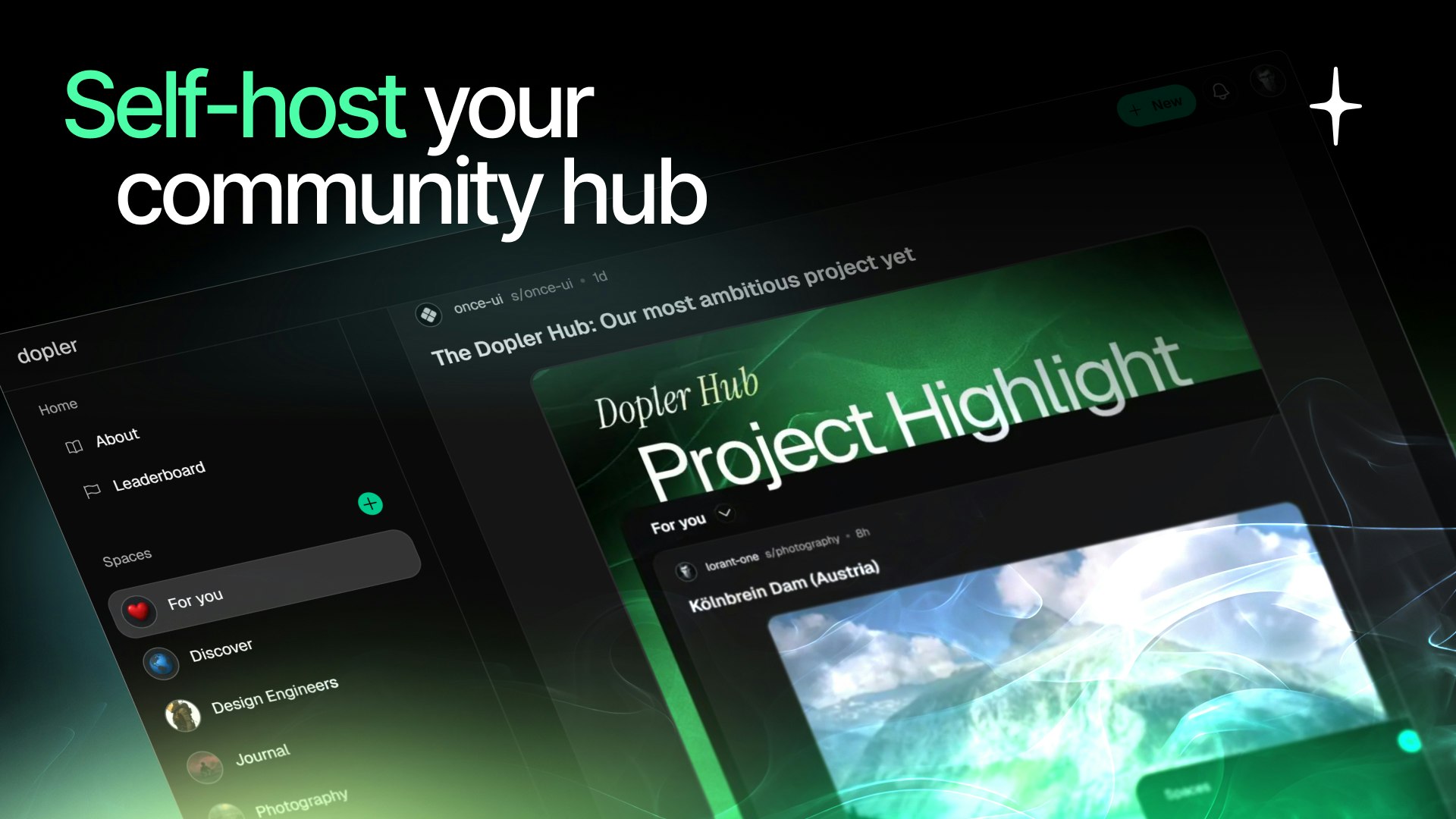
Supa Social is a production-ready, self-hosted social platform built on Supabase and Once UI (Once UI being the team’s own open-source design system, which has apparently developed a real following in the indie builder community). The pitch is that you can deploy a fully functional social platform in about 15 minutes.
That claim is doing a lot of work, so let me break down what you actually get. Out of the box: authentication, user profiles, a follower graph, role-based permissions, moderation tools, notifications, and a feed that supports multiple post formats. That’s not a starter kit with placeholder components. That’s a functioning social product.
The Supabase backend choice is interesting to me. Supabase handles auth, the Postgres database, and realtime subscriptions. It also has a generous free tier and is itself open-source-ish, so the self-hosting story is reasonably coherent end to end. You’re not self-hosting one layer and then punting on the database to some SaaS you can’t escape.
Once UI handling the frontend means the UI is actually cohesive, which sounds obvious but isn’t. Most “deployable” social templates I’ve seen look like someone assembled them from three different Tailwind starter packs.
The use cases listed on the product page span a wide range: niche social networks, internal company hubs, customer communities, builder ecosystems. That breadth is either genuinely flexible architecture or marketing vagueness. The demo at hub.dopler.app is live, which helps. It got solid traction on launch day when it appeared on Product Hunt.
This fits the same general vibe as tools like Anything API, where the thesis is: infrastructure is commoditized, so package it into something a developer can actually ship. The difference is that Supa Social is betting on a specific product category, not a general pattern.
One thing I’d want to poke at: moderation tooling. “Moderation” as a checkbox feature and moderation as something that actually scales when your community grows are very different things. The feature list mentions roles and moderation but doesn’t get specific. That matters a lot for the customer community and niche network use cases.
The Verdict
I think this is a genuinely useful product for a specific kind of builder. If you’re a developer who wants to spin up a community around your product and you don’t want to pay Circle.so $99/month or hand your users’ data to Discord, Supa Social is a real option. The Supabase foundation is solid. The UI looks professional. The feature set covers the basics you’d spend weeks building yourself.
The thing that could limit it is the same thing that limits a lot of developer-first community tools: the hardest part of community is not the software. It’s the people. Supa Social solves the infrastructure problem well, but the builders who deploy it still have to do the actual community work. That’s not a knock on the product. It’s just scope.
At 30 days, I’d want to see how many people actually deployed it versus how many downloaded it and let it sit in a repo. At 60 days, I’d want to see if anyone using it for a real community has hit the moderation limits. The social space is littered with products that worked great at ten users and fell apart at a thousand. Whether Supa Social’s architecture holds up under actual load with actual communities is the real test.
For anyone building in the developer tools space, the comparison to watch is this one against tools like Agent Commune, which is trying to build community infrastructure at a different layer entirely. They’re solving adjacent problems from opposite directions.
Buy it for a specific project. Don’t deploy it hoping community happens.