














merge-b1196c9f-92ff-4d43-b239-0ce4da5a9339
Use your Apple Watch with any Android phone
The Apple Watch Has Always Been a Closed Garden. Merge Is Digging a Tunnel Under the Fence.
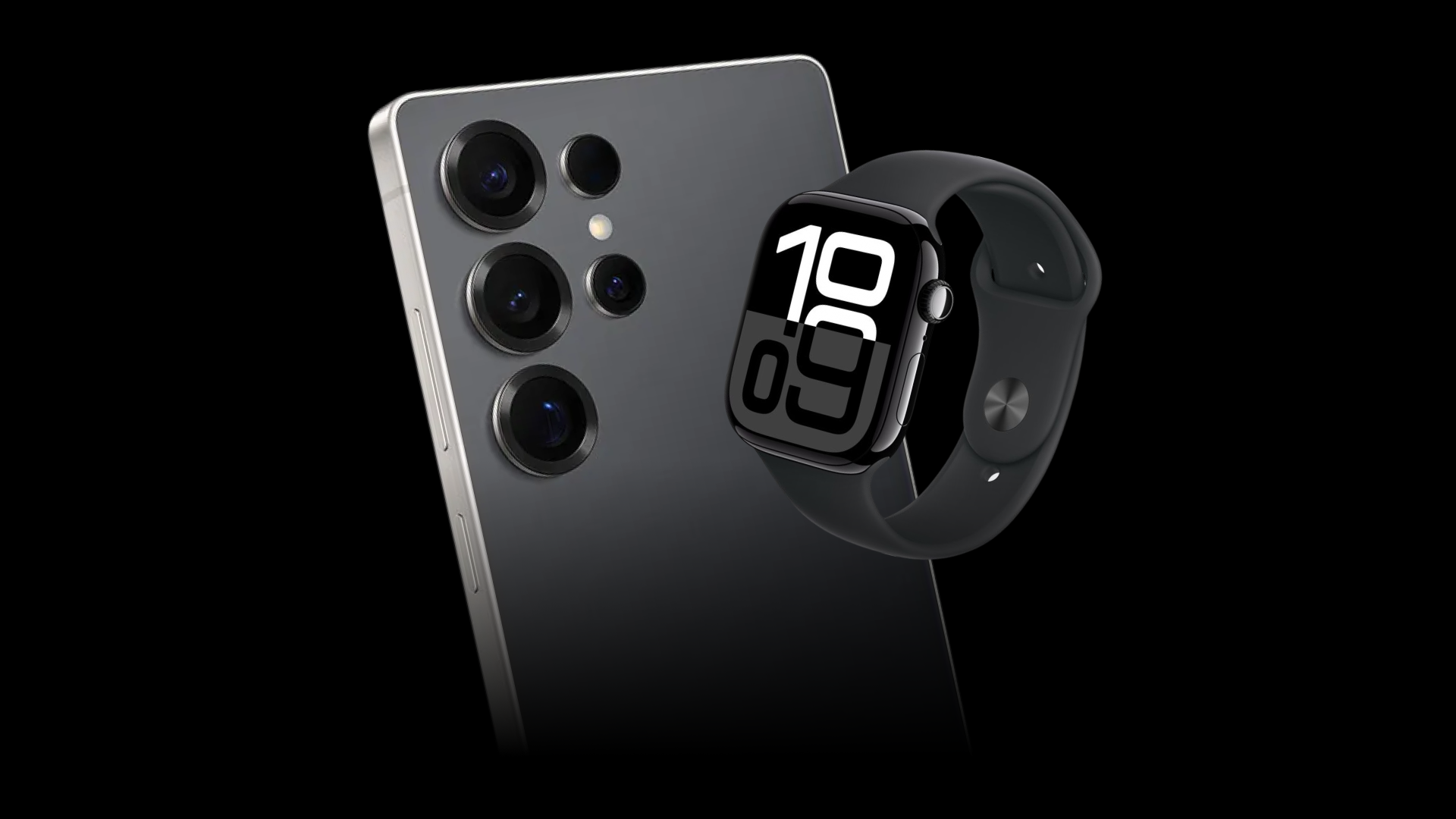
The Macro: Walled Gardens Have Load-Bearing Walls, But Also Doors If You Look Hard Enough
Android holds somewhere between 70 and 73 percent of the global smartphone market, depending on which analyst you ask and what quarter they’re counting. Multiple sources put it in that range, and the trajectory is roughly flat or slightly up through 2026. That’s a massive installed base of people who, in theory, cannot use an Apple Watch. Not because the hardware won’t pair over Bluetooth, but because Apple made the software dependency on iPhone load-bearing. No iPhone, no watchOS setup, no Apple Watch. It’s a tidy lock-in mechanism that doubles as a hardware upsell.
The practical result is a bifurcated wearables market.
If you’re on Android, your options are Wear OS (Google’s platform, genuinely improved but still a distant second in health sensor fidelity on most devices), Samsung’s Galaxy Watch line (solid, actually), and a long tail of fitness trackers. If you want the Apple Watch’s specific health suite, the ECG, the blood oxygen, the fall detection, the sleep stages, you historically needed to also carry an iPhone. For the 70-something percent of the world on Android, that’s a hard pass.
There’s real demand in that gap. Reddit threads in r/GalaxyWatch show people actively wrestling with cross-ecosystem loyalty, attached to their Android phone but eyeing Apple Watch hardware. The question isn’t whether the demand exists. It’s whether a third-party app can actually bridge it without Apple closing the hatch. Apple has shown little patience for apps that route around its dependencies. That’s the sword hanging over this whole category.
The Micro: Two Apps, One Bluetooth Handshake, Surprisingly Ambitious Scope
Merge is, mechanically, two apps talking to each other over Bluetooth. One lives on the Android phone. One installs directly on the Apple Watch via the Watch App Store. That second part deserves a second: the watchOS app is a real, App Store-distributed application, not a sideload, not a jailbreak workaround. That’s the only reason any of this is viable.
The feature set is broader than you’d expect.
On the health side, Merge claims it syncs Apple Watch health data to any Health Connect-compatible Android app, which means the data theoretically flows into whatever fitness stack you’re already running on Android. For notifications, it’s bidirectional enough to support replies and media playback controls. That puts it closer to a full companion app than a read-only data bridge.
It also works the other direction: Wear OS watches paired to iPhones. That’s a less-covered use case, and it suggests the team is thinking about this as a platform play, mix-and-match your preferred hardware from either side, rather than a single niche wedge. That’s either an ambitious read of the market or an overstretched one. Probably find out within a year.
It got solid traction on launch day. For a utility app with a narrow but passionate addressable audience, that tracks.
The technical risk here is Apple. If Merge relies on any APIs that Apple decides to restrict, or if a watchOS update changes how third-party apps communicate over Bluetooth, the whole thing can degrade without warning. That’s not hypothetical hand-wringing. It’s the structural reality of building on a platform owned by your implicit adversary.
The Verdict
Merge is solving a problem that Apple created deliberately and has zero incentive to solve itself. That’s both the opportunity and the ceiling.
At 30 days, the question is whether Bluetooth sync is reliable enough for daily use. Health data is only useful if it’s consistently captured. A watch that drops sync three times a week is worse than useless because it creates false gaps in your data. User reviews will tell that story faster than any press coverage.
At 60 days, the question is API stability. If Merge survives a watchOS point release without breaking, that’s a real confidence signal. If it breaks, the speed of the patch matters a lot.
At 90 days, the question is retention. People who cross ecosystem lines tend to be high-intent. They’re not casual users. If Merge can hold that cohort, word-of-mouth in Android enthusiast communities could do a significant share of the distribution work.
I think this is probably a genuine daily driver for a specific kind of person: committed to Android, attached to Apple Watch hardware for health reasons, and patient enough to tolerate some rough edges. It won’t work for anyone who needs bulletproof reliability or who doesn’t want to think about sync latency as part of their morning.
I’d want to know two things. What’s the sync latency on health data, real-time or batch? And what happens to the Apple Watch’s native iPhone pairing, full unpair required, or can Merge run alongside it? Those answers settle whether this is a product or a proof of concept.
Also featured on HUGE: 117x Faster and Free: The Android Video Compressor That Has No Business Being This Good · Voicr Wants to Be the Translator Between Your Brain and Your Keyboard · SuperPowers AI Wants Your Phone to See What You See and Actually Do Something About It