















the-new-v0
Full stack vibe coding platform. Created by Vercel.
Vercel Wants to Own the Whole Stack, Not Just the Edge
The Macro: Everyone’s Building the Same Shovel
Here’s the thing about the AI coding tool market in 2026: it’s crowded in a way that should make anyone slightly nervous about launching into it. Lovable, Bolt.new, Cursor, GitHub Copilot Workspace — they’re all circling the same basic premise, which is that writing code by hand is increasingly optional. The AI productivity tools market was valued at around $8.8 billion in 2024 and is projected to hit roughly $36 billion by 2033, so yes, there’s room. But ‘there’s room’ is doing a lot of heavy lifting when half the YC batch is building in this space.
What’s interesting — and slightly underreported — is the fault line that’s opening up between consumer-grade vibe-coding toys and tools that can actually survive contact with an enterprise engineering org. Most of these products are excellent at generating a landing page or a weekend prototype. They fall apart when you introduce git history, environment variables, SOC 2 requirements, and the specific anxiety of a VP of Engineering who has to sign off on something touching production. That’s the gap Vercel is explicitly trying to occupy with the new v0, and it’s a smarter bet than yet another ‘just describe your app’ consumer tool.
Vercel isn’t a scrappy newcomer here, which, look, cuts both ways. They have deep infrastructure credibility from years of running Next.js deployments at scale. They also carry the expectations that come with that credibility. The bar for ‘enterprise-ready’ from Vercel is higher than it would be from a six-person startup, and the Product Hunt crowd will hold them to it.
The Micro: Git History, AWS Connections, and the 90% Problem
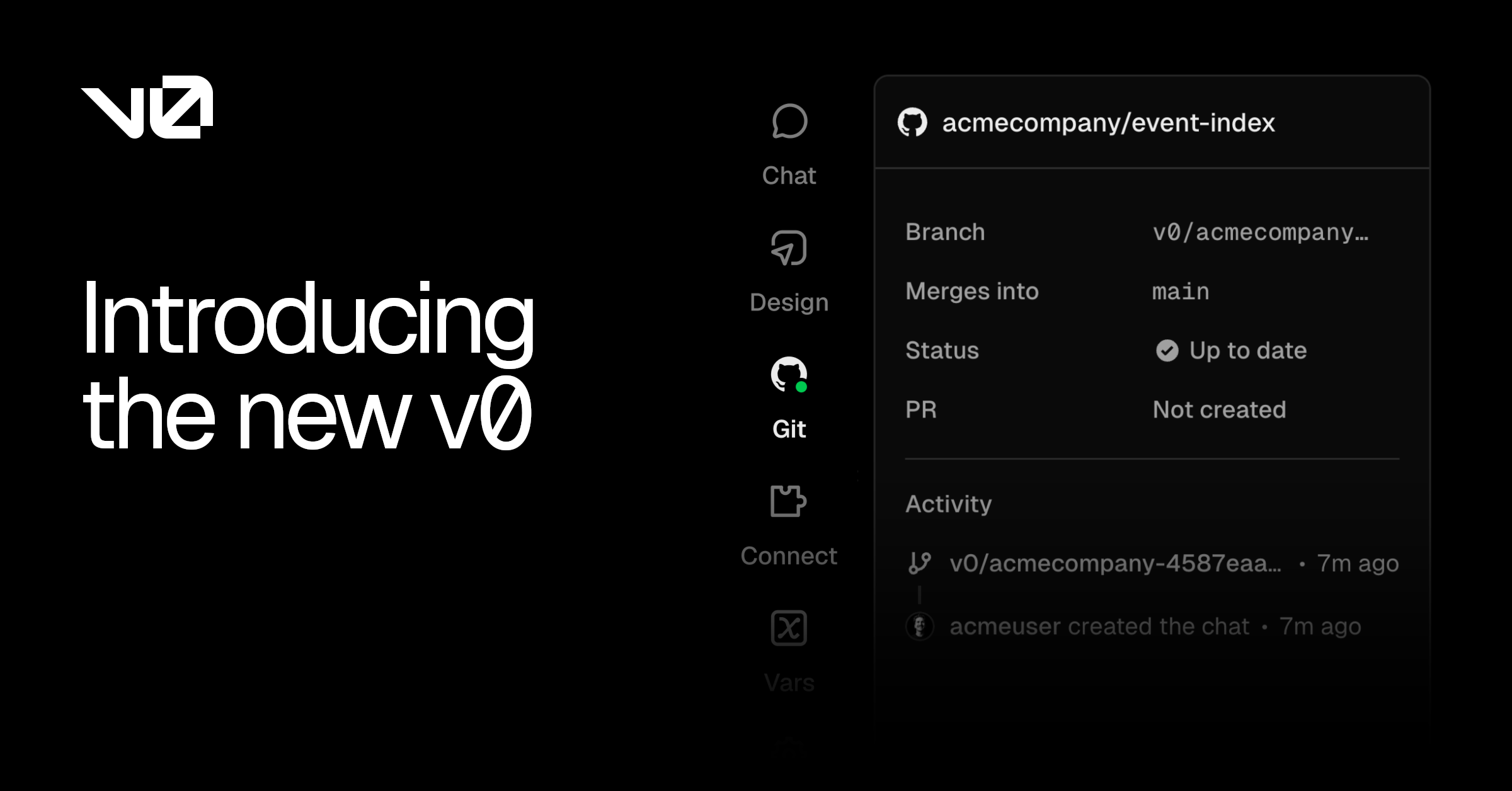
The new v0 is Vercel’s attempt to solve what one LinkedIn post aptly called ‘the 90% problem’ — the part of AI-assisted development where the tool generates something impressive and then immediately stops being useful once you try to wire it into a real codebase. According to the product and supporting commentary, the new v0 pulls in your existing repository, reads your environment variables, and connects to external data sources including AWS and Snowflake. That’s not a toy feature — that’s the difference between a demo and something an engineering team might actually route work through.
The agentic architecture is the real technical bet. According to multiple sources covering the launch, v0 now uses an agentic AI system that plans, researches, builds, and debugs across multiple steps — adapting as context changes rather than generating a single output and waiting for your next prompt. Guillermo Rauch reportedly gave a hands-on tour of the system to Claire Vo for a live episode in San Francisco, which suggests Vercel is comfortable enough with the product to demo it in real-time (always a meaningful signal).
The enterprise pitch wraps around git workflows, team collaboration features, and security integrations — the stuff that would make this viable in a company that has an actual procurement process. On Product Hunt, the launch landed at #2 for the day with 421 votes and 22 comments, which is a reasonable but not explosive showing. For Vercel, a company with significant existing distribution, this reads less as ‘viral discovery moment’ and more as ‘formal announcement to a community that already knows who we are.’
The template gallery visible on the product page skews toward real use cases — an AI agent builder, a multiplayer chatroom, a modern agency site — rather than toy demos. That’s a deliberate choice and a reasonably smart one.
The Verdict
Vercel is making a credible play here, and I’ll credit them for targeting the right problem. The enterprise gap in vibe-coding is real, the infrastructure lineage is legitimate, and the agentic approach is directionally correct. None of that means this is a sure thing.
At 30 days, the question is whether the git and data-source integrations work as advertised outside of a controlled demo — or whether they work for Vercel’s preferred stack and quietly struggle with everything else. At 60 days, I’d want to see whether teams are actually adopting this as a shared workflow tool or just individual developers using it like a faster Cursor. At 90 days, the real signal will be enterprise contract velocity, which we won’t see publicly but will hear about in the ambient noise of engineering Twitter.
What could sink it: if the ‘production-ready’ framing turns out to mean ‘production-ready if you’re already fully on Vercel,’ the enterprise pitch collapses into an upsell. That would be both predictable and disappointing.
What would make it genuinely matter: if the agentic system actually reduces the back-and-forth on complex, multi-file changes in real codebases — not just greenfield projects — then Vercel has something the others don’t yet. That’s the version worth getting excited about. We’re not there yet, but it’s not a ridiculous outcome to imagine.