















donely
Your own OpenClaw instance for $0/mo + free AI usage offer
Donely Wants to Be the Lazy Tax on OpenClaw Hosting
The Macro: Everyone Wants an AI Agent, Nobody Wants to Run One
Self-hosted AI agents are having a moment. The pitch is always the same: full control, no vendor lock-in, your data stays yours. The reality is that spinning up your own OpenClaw instance, keeping it running, wiring it to your other tools, and debugging it when something breaks at 2am is a part-time job. Most people don’t want that job.
This is the gap that a small cluster of startups is quietly moving into. Not building the agent frameworks themselves, just wrapping them in managed hosting with a sane UI. The logic is borrowed straight from the cloud era: AWS didn’t invent Linux, they just made it so you didn’t have to manage the hardware. Same play, different layer.
OpenClaw specifically has developed a real following among developers who want autonomous AI workers without being fully locked into whatever Anthropic or OpenAI decides to build into their first-party products. The alternatives conversation is genuinely active right now, with threads full of people asking for no-code versions, hosted versions, anything that lowers the barrier. Names like NanoClaw and Moltbot are showing up in those threads. The space is fragmented and nobody has really run away with it yet.
The productivity software market is enormous (multiple sources peg it between $61 billion and $71 billion in 2024-2025, growing fast) but that number is mostly noise at this stage. What matters for a product like Donely is the much smaller and more specific question: how many developers and small teams are looking for managed OpenClaw hosting and haven’t found something they actually like yet.
Based on what I’m seeing in the forums, that number is real. Small, but real.
The Micro: $0/Month Is Doing a Lot of Work in That Headline
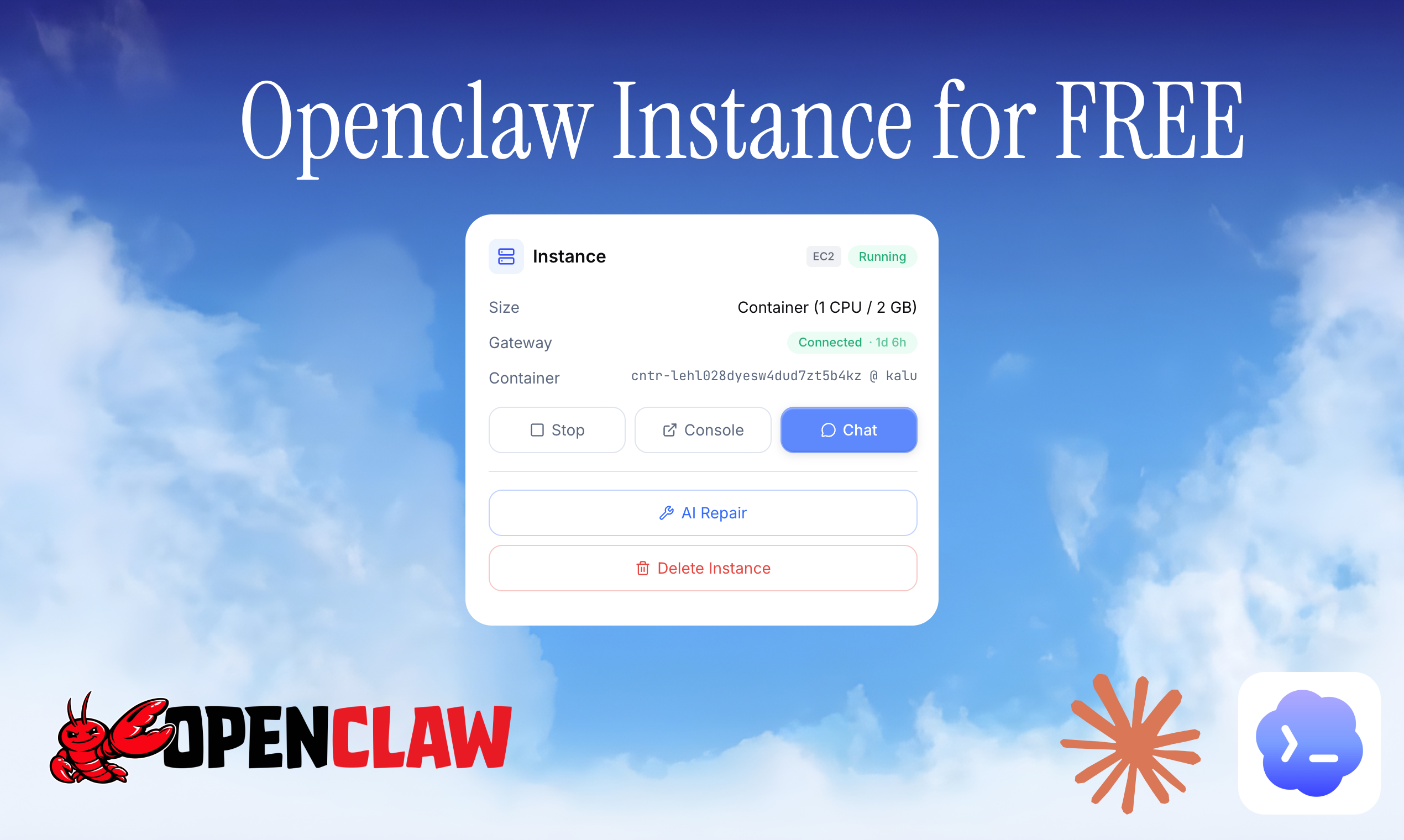
Donely’s core offer is a fully managed, isolated OpenClaw container. You sign up, you get your own instance, it’s live in 30 seconds. That’s the pitch and honestly the 30-second number is doing a lot of lifting. If it’s real, it matters.
The free tier gets you the container. You pay for AI credits as you use them, which is a reasonable model if you trust their credit pricing isn’t the hidden margin play (I’d want to see those numbers before committing). The $25/month Personal plan is where it gets more interesting: you can bring your own OAuth Claude or Codex accounts, which means you’re not forced into Donely’s credit pricing if you already have API relationships with Anthropic or OpenAI. That’s a genuinely good product decision. It signals some respect for the user.
The 950+ app integrations via Slack, Gmail, and presumably something like Zapier or Make under the hood is table stakes at this point. I’d want to know which of those connections are native and which are passing through a third-party connector, because that distinction matters when something breaks.
The AI repair feature is the part I find most interesting. The claim is that if your instance breaks, Donely’s AI layer fixes it automatically. That’s either a very good idea or a demo feature that covers 10% of actual failure modes. Probably somewhere in between.
Harsha Abegunasekara, the founder, reportedly dropped out of medical school and previously co-founded Metana.io, a developer education company. According to his LinkedIn, Donely has gone through at least one significant pivot toward autonomous AI workers for companies. The product has a scrappy, iterated feel to it.
It got solid traction on launch day, which suggests the free tier positioning landed.
We’ve covered adjacent bets in this space before, including Agent 37’s push on AI agent pricing and CoChat’s team-oriented agent stack. Donely is carving a different angle: personal, low-friction, and priced to get you in the door.
The Verdict
Donely is a sensible product for a real problem. Managed OpenClaw hosting with a free entry point and bring-your-own-API support is a reasonable combination, and the 30-second setup claim is the kind of thing that either converts people immediately or destroys trust when it doesn’t work. That’s the first 30-day test: does the onboarding actually deliver what it promises, or does it have the typical asterisk-riddled edge cases that make “30 seconds” a lie.
The 60-day question is credit pricing. If the free tier is genuinely useful and the per-credit cost is competitive, this could build real word-of-mouth in developer communities (where, full disclosure, I spend probably too much time). If the credits are expensive and the free tier is basically a demo, churn will be fast.
At 90 days, the question is retention on the Personal plan. $25/month is cheap enough that people won’t cancel out of anger, but it’s not so cheap that they’ll keep paying out of inertia.
I’d also want to know more about the reliability story. The AI repair feature is interesting but the PinMe approach to low-friction deployment shows how quickly “it just works” promises can become liabilities if the infrastructure isn’t solid.
The thing I actually want to know: what does uptime look like on those isolated containers when they’re under real workload. That’s not a question the landing page answers.