













dune-5
Context-aware Mac keypad to automate workflows + meetings
Dune: The 3-Key Mac Keypad That Adapts to Any App
The productivity hardware category has been coasting on the same basic premise since someone decided a Stream Deck was a personality trait. Physical macro keypads, RGB lighting, a grid of programmable buttons you forget to reprogram after the first week. The pitch never really changes. Which, look, that’s the setup Dune is walking into, and I think it’s worth paying attention to how they’re trying to sidestep it.
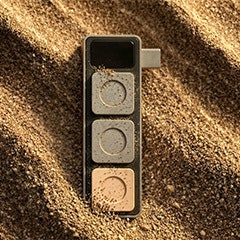
Dune is a three-key physical keypad for Mac. Three keys. That’s it.
The context-aware part is the actual story here. The device reads whichever app is running in the foreground and changes what those three keys do in real time, automatically, without you having to switch profiles or think about it. You’re in VS Code, the keys do one thing. You flip over to Zoom, they do something else. You’re in Claude running an AI agent workflow, different again. According to the product listing, it’s built specifically for developers living inside GitHub, VS Code, Claude, and Openclaw, plus anyone grinding through back-to-back video calls on Zoom, Teams, or Google Meet.
Garo Sarkissian, CEO and founder of Dune Labs, brings more than 30 years of experience in technology, M&A, and corporate development to this product, according to his Crunchbase profile. That’s an unusual background for a hardware startup founder. Most hardware people come up through electrical engineering or product design. Sarkissian is coming at this from the strategy and finance side, which could mean the positioning is sharper than the actual engineering, or it could mean the product reflects genuine enterprise-grade thinking about how knowledge workers actually move through their tools.
I’m keeping an eye on which one it is.
Here’s the thing about three keys specifically. That constraint is doing real work in the product’s argument. A Stream Deck gives you fifteen or thirty-two programmable buttons, and what most users end up doing is filling them with actions they use maybe twice a week because the interface for managing profiles is annoying and context-switching between profiles is manual. The cognitive overhead of maintaining a grid of shortcuts erases a chunk of the benefit. Dune is betting that three keys that are always contextually correct beats thirty keys you have to manage.
That bet makes sense to me. The global business productivity software market hit $62.5 billion in 2024, according to a Yahoo Finance analysis of industry research, and it’s projected to grow at a 14.8% compound annual rate from there. The productivity apps segment specifically is sitting at roughly $14.46 billion in 2026, according to Fortune Business Insights, with projections reaching $30.85 billion by 2034. Hardware sits at an awkward intersection of that growth because it competes with pure software solutions that don’t require you to ship a physical object to a customer’s desk. The fact that Dune chose to build hardware anyway suggests the team believes the tactile, always-present physical button solves something that keyboard shortcuts and software overlays do not.
They might be right. I’ve used enough “just remap your keyboard” solutions to know they fail at the commitment layer. A physical device on your desk is a reminder that exists in the real world. You see it. You build a habit around it because it occupies physical space. A software layer you have to remember to activate is easy to stop using. The hardware bet is actually defensible on those grounds.
The Product Hunt launch did well, ranking number one on its launch day with 552 votes and 100 comments, which signals genuine community interest rather than just founder friends clicking upvote. That kind of engagement tells you people are at least intellectually convinced by the pitch.
But I have real questions here.
The three-key constraint only works if the context detection is fast and reliable. If there’s any lag between switching apps and the keys updating, the whole thing breaks. If the app doesn’t recognize a niche tool you use and falls back to some generic state, you’re stuck. The product specifically names GitHub, VS Code, Claude, Openclaw, Zoom, Teams, and Google Meet as supported contexts, which is a reasonable starting list for 2026, but it’s also a short list. What happens when you’re in Figma? What happens in Arc, or Raycast, or whatever terminal you’re running? The product listing doesn’t answer that. The website content wasn’t available when I looked.
That gap is the main reason I’d want to spend a week with this device before telling you to buy it.
There’s also the question of what exactly the keys do in each context, which the current public information doesn’t fully spell out. “Automates workflows and meetings” is a tagline, not a spec. For developers, I’d assume something like commit, push, and test in VS Code, or approve and merge in GitHub. For meetings, probably mute, camera toggle, and leave. But I’m guessing, and for a hardware product where the value proposition is entirely in the software layer, the specifics matter a lot.
“The context-aware part is the actual story here,” I’d tell someone asking me whether to back this. The physical form factor is just the delivery mechanism.
The Mac-only positioning makes sense given where developer tooling attention sits right now, and it probably reflects a practical engineering decision about depth of integration over breadth of platform support. Apple’s ecosystem gives you reliable APIs for querying foreground applications. It’s a reasonable place to start.
What I find genuinely interesting about Dune is that it’s solving a real problem I haven’t seen solved cleanly before. The problem is that your context changes constantly throughout a workday, and most productivity hardware ignores that entirely or makes you manage it manually. The broader research on knowledge worker productivity has consistently pointed to context-switching cost as one of the main drains on focus time. A device that adapts to your context rather than requiring you to adapt to it is pointing in the right direction.
Whether the execution matches the concept is the unresolved part. Sarkissian told the Product Hunt community that Dune is “built for developers who live in GitHub, VS Code, Claude, Openclaw, and for anyone running AI agents or in back to back meetings,” which at least shows the team has a specific user in mind rather than trying to pitch this to everyone who owns a keyboard.
I want to be clear about what I think this is and isn’t. It’s a smart concept with a credible strategic founder and a launch that landed well. It is not, based on what’s publicly available, a proven product. The hardware category has a long history of clever ideas that fell apart on firmware reliability or software update cadence. Building a device that depends on tight Mac integration means you’re one macOS update away from something breaking, and you need a team that can ship fixes fast.
The AI agent workflow angle is the most interesting long-term hook. As more developers run persistent AI agents across multiple tools simultaneously, the need for physical controls that track what’s happening across contexts gets more compelling, not less. If Dune’s software layer can eventually handle agent state, not just foreground app state, that’s a different product than what’s being described right now. It’s a better product.
For now, Dune is a focused, opinionated piece of hardware making an honest argument that three smart keys beat thirty dumb ones. Given how often I’ve watched productivity hardware end up as a $150 paperweight six months after purchase, honest and focused is a better starting point than most.